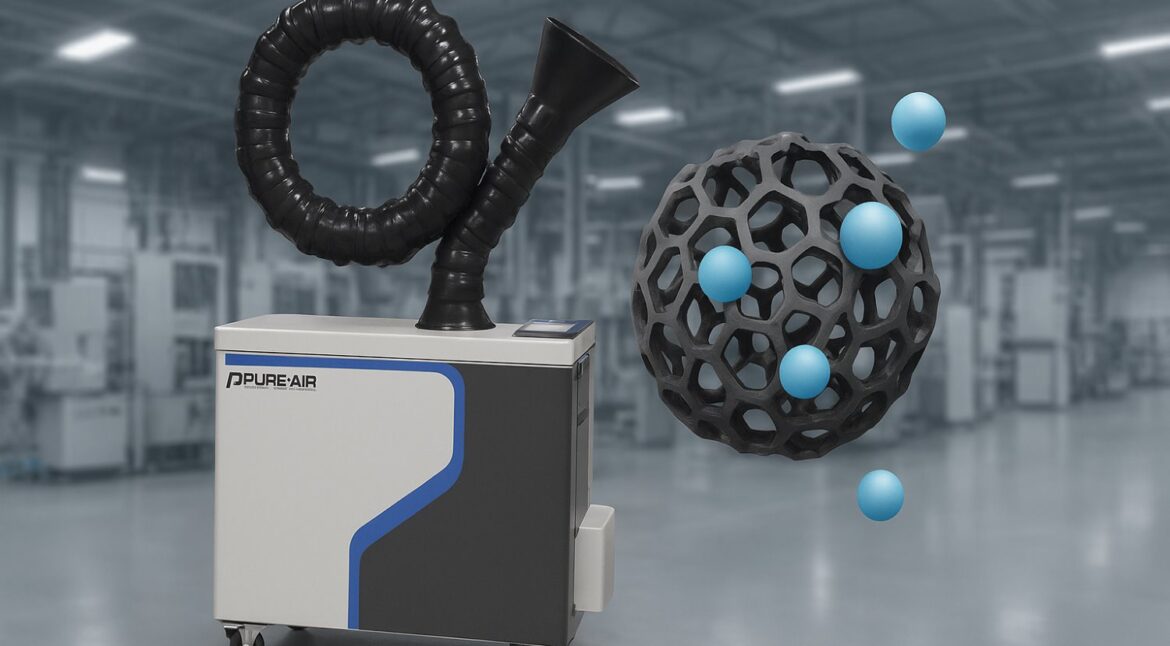
In today’s industrial environment, factories and plants face increasing demands to control airborne contaminants, volatile organic compounds (VOCs), and odorous gases. For procurement teams, plant managers, and equipment buyers, understanding the science behind a reliable solution matters. This article focuses on activated carbon filters in the context of industrial fume extraction and air purification systems. We will emphasise how a high-performance carbon fume filtration filter operates on a molecular scale, how micropore structure drives adsorption, and how plant-level engineering choices influence performance and longevity. Although the topic is technical, we use clear language and active-voice phrasing to ensure actionable insights for industrial equipment procurement and design.
Why Activated Carbon Matters in Industrial Fume Extraction
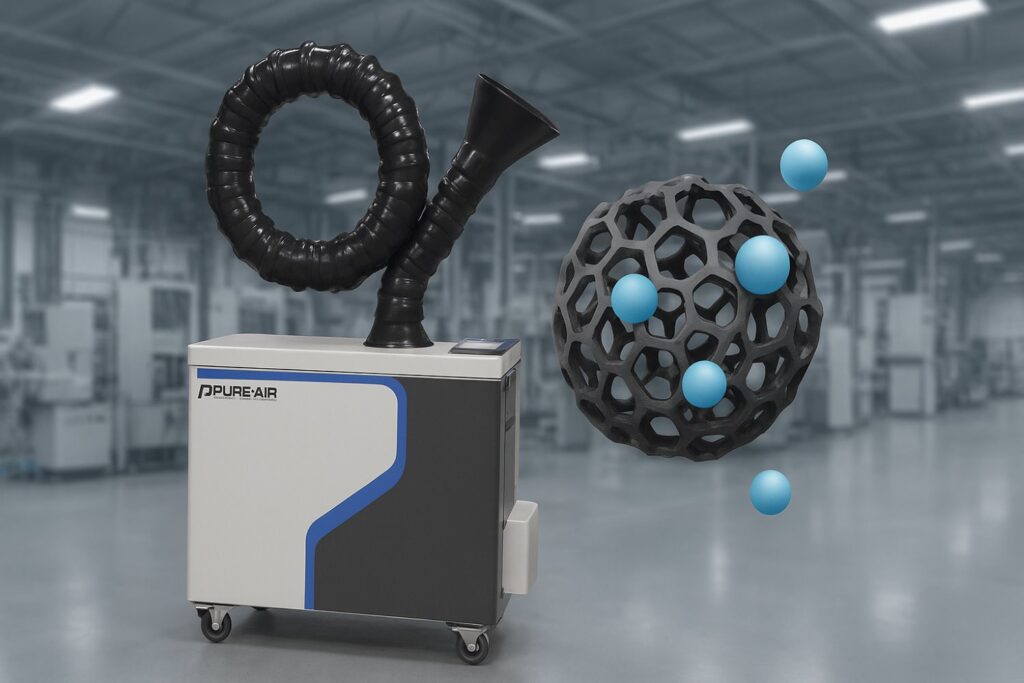
Industrial fume extraction systems typically deal with gas-phase contaminants, including solvent vapors, odorous sulfur compounds, acid gases (such as HCl and SO₂), degradation by-products, and general odors from production lines. Standard mechanical filtration or HEPA media may remove particulates, but cannot sufficiently capture gases or VOCs. This is where the carbon fume filtration filter comes into play: using activated carbon media (granular or pelletised) inside a filter bed, the system adsorbs gaseous molecules and removes them from the airstream.
Yet the efficacy of such systems hinges entirely on the underlying science — the micropore architecture of activated carbon and the adsorption mechanism at the molecular scale. Without that understanding, procurement decisions can be sub-optimal, resulting in higher lifecycle cost or reduced removal efficiency.
Fundamental Adsorption Mechanism of Activated Carbon
The core of a carbon fume filtration filter is the activated carbon substrate. To grasp how it works, we dissect the mechanism into four parts:
1. What is Activated Carbon?
Activated carbon is a highly porous carbonaceous material. In simple terms, it has an extraordinary internal surface area and a network of micropores (typically pore widths < 2 nm). Such porosity allows large numbers of gas molecules to adhere to internal surfaces. The raw carbon precursor (coal, coconut shell, wood) is processed by carbonisation and activation (physical or chemical) to develop that microporous architecture.
2. Adsorption (Not Absorption)
In gas‐phase filtration, the correct term is adsorption: molecules adhere to the surface of the filter media rather than being absorbed into its bulk structure. The driving forces typically include van der Waals interactions (London dispersion forces) and other molecular‐surface interactions (π–π interactions, electrostatic, and hydrogen‐bonding depending on surface functional groups).
3. Role of Micropore Structure
The micropore network defines the performance limits of activated carbon in gas‐phase filtration. Key points include:
-
The micropore size distribution (MPSD) strongly influences which molecules can enter and adsorb inside the pores.
-
In very narrow micropores (approx. < 1 nm), the predominant mechanism is micropore “filling” rather than simple surface monolayer adsorption.
-
A larger internal surface area (e.g., >1000 m²/g) correlates with higher adsorption capacity.
-
The presence of mesopores (2-50 nm) and macropores (>50 nm) serves as channels to deliver gas molecules to micropores; hence, a hierarchical pore network is favourable in filter media.
4. Molecular Capture Mechanism in Fume Extraction
For industrial fume extraction, typical target molecules include VOCs (e.g., toluene, xylene), acid gases (HCl, SO₂), odour molecules (thiols, amines, H₂S) and solvent vapours. How are they captured?
-
Gas molecules flow through the filter media and reach pore entrances. They diffuse into micropores.
-
Once inside, van der Waals forces and surface interactions cause the molecules to adhere to the pore walls. In narrow micropores, the adsorbate-adsorbent interactions may dominate over molecule–molecule interactions.
-
If the micropore is dimensionally comparable to the molecule size, a more efficient filling mechanism occurs: the molecule effectively occupies the pore and interacts with multiple surfaces simultaneously.
-
Surface functional groups (oxygenated groups, aromatic rings, heteroatoms) provide supplementary interaction points: for example, π–π stacking between aromatic VOCs and graphitic carbon surfaces. One study found that an activated carbon prepared with ZnCl₂ activation had abundant aromatic C=C structures, which enhanced π–π interactions and improved adsorption.
-
The process is largely physical (physisorption) rather than chemical binding (chemisorption) for many gas‐phase pollutants; hence, desorption/regeneration is feasible under appropriate conditions.
Key Performance Parameters for Industrial Buyers
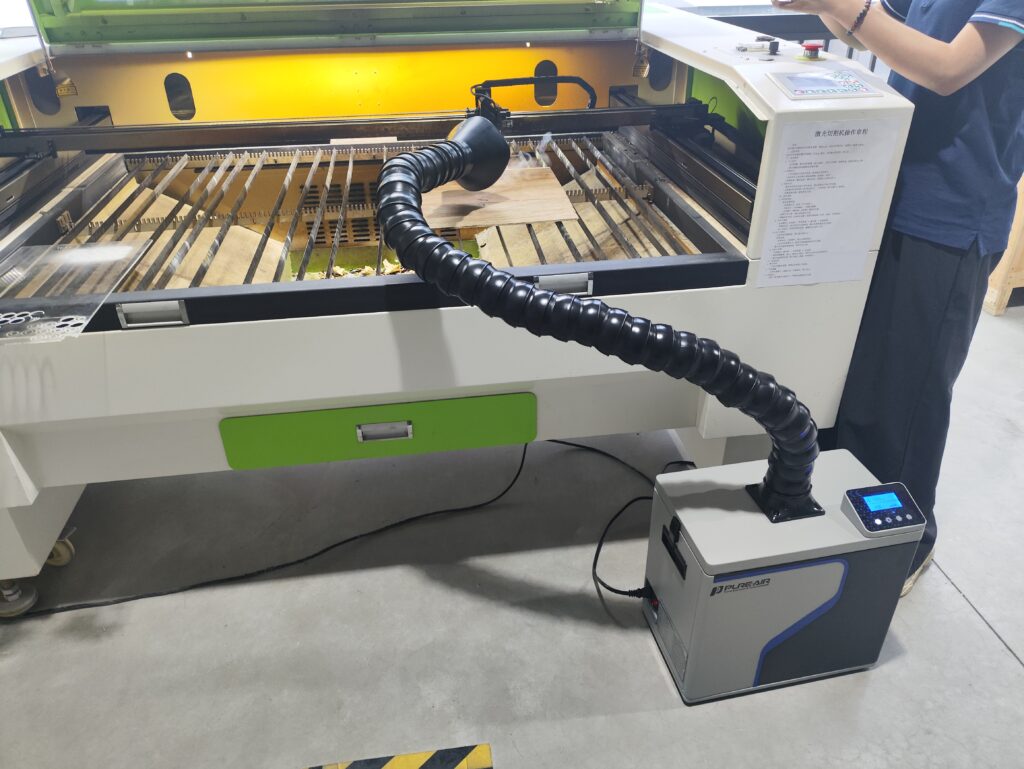
When a factory or equipment procurement team evaluates a carbon fume filtration filter solution, several technical metrics matter. Here’s a breakdown:
Surface Area & Pore Volume
Higher specific surface area (SSA) means more internal surface for adsorption. For example, some activated carbons report SSA > 1200 m²/g. Alongside SSA, the total pore volume and micropore volume are essential: more micropore volume (within the correct size range) translates to higher capacity.
Micropore Size Distribution (MPSD)
As noted above, the size of micropores must match the molecular size of the target contaminants. If pores are too large, molecules may not interact with multiple surfaces; if too small, molecules may not even enter. One study shows that the adsorption capacity for a given molecule peaked when the maximum of the MPSD was aligned with the molecule’s critical size (e.g., 0.5-1.1 nm for a given organic molecule). For industrial fume extraction, choosing an activated carbon whose micropore architecture matches the spectrum of gas pollutants is a must.
Diffusion and Mass Transfer Considerations
In an industrial airflow system, beyond static adsorption capacity, dynamic behaviour matters: how quickly gas molecules can access the adsorption sites. Factors include:
-
Presence of mesopores/macropores to serve as conduits.
-
Bed design (flow channeling, residence time, contact time).
-
Gas temperature, humidity, and competing gas species (moisture competes for adsorption sites).
-
Regeneration or replacement strategy for saturated media.
Adsorption Kinetics and Isotherms
Understanding the kinetics (how fast adsorption occurs) and isotherms (equilibrium adsorption at different concentrations) enables calibration of the filter system for a given gas load. For example, one study on activated carbon for dye adsorption found the pseudo-second-order kinetic model best fitted the data and identified film diffusion as rate-limiting. While that study is for the liquid phase, analogous principles apply for the gas phase: boundary layer resistance, pore diffusion resistance, and equilibrium capacity dictate system sizing for industrial gas handling.
Filter Bed Life and Regeneration Potential
Activated carbon is finite in capacity: once many sites are occupied, adsorption drops off. For industrial fume extraction, key questions include:
-
How long will the filter bed perform at design efficiency (adsorption reach breakthrough)?
-
Can the activated carbon be regenerated (thermally or chemically) or must it be replaced? According to the literature, thermal regeneration under inert / steam at high temperature is used to restore capacity in some cases.
-
How does the presence of moisture, acid gases, particulate matter, or high temperature degrade the carbon or block micropores?
Industrial Application Scenarios: Procurement and Plant Integration
Here we illustrate some practical scenarios relevant to plant engineers, procurement specialists, and system integrators working in B2B industrial equipment contexts.
Scenario A: Solvent Vapour Extraction in Chemical Manufacturing
A chemical plant uses a fume hood to capture solvent vapours (e.g., toluene-based) from batch mixing operations. The exhaust stream includes mixed VOCs, moisture, and possibly elevated temperature. For the procurement team ordering a carbon fume filtration filter module, the following aspects matter:
-
Select an activated carbon grade with a micropore architecture optimised for aromatic VOCs (the molecule size of toluene is ~0.6 nm). A grade with micropores ~0.7–1 nm would provide effective filling and adsorption.
-
Ensure the filter bed has sufficient volume and residence time: given the gas flow rate and expected VOC concentration, size the bed to achiev, 90% removal. Use adsorption capacity data from the carbon manufacturer to compute bed life.
-
Account for moisture: high humidity may compete for adsorption sites and reduce capacity; thus, pre-drying or moisture control may be necessary.
-
Consider upstream particulate filtration: if particulates enter the carbon bed, they may block access to micropores and reduce performance.
-
For procurement: review data on specific surface area, micropore volume, dynamic adsorption capacity (VOC mixture), recommended replacement interval, and regeneration options.
Scenario B: Acid Gas Handling in Metal Finishing Plant
A plant produces acid mist (HCl or SO₂) from pickling lines, with a fume extraction system in place. A carbon fume filtration filter is being specified for the downstream adsorption of acid gases and odorous sulphur compounds. Key technical considerations:
-
Activated carbon may need impregnation (e.g., with potassium iodide, amine functional groups, or metal salts) to better capture acid gases and sulfur compounds. While this is beyond basic micropore adsorption, the core micropore network still supplies capacity.
-
The procurement team should ensure that the carbon’s pore structure is developed (high SSA, micropore volume) and that the modified surface chemistry remains stable under acidic conditions.
-
The system must provide for bypass or venting of acid gases if saturation occurs, and monitor bed exhaustion (through differential pressure, gas analyser, or scheduled replacement).
-
Regeneration may not be practical for highly acidic or corrosive gas cases; the procurement decision may favour cost-efficient replacement rather than regeneration.
Scenario C: General Manufacturing Plant with Odour Control
A food packaging plant deals with odour-emitting processes (amines, sulphur compounds). The ventilation exhaust is a moderate flow rate. Here, the carbon fume filtration filter module needs to be integrated into the HVAC extraction system. Points for the buyer:
-
Since odour molecules may be larger or more complex (thiols, mercaptans), the micropore architecture needs a broader pore size distribution (e.g., micropores plus small mesopores) to capture larger molecules or clusters.
-
The bed may serve during off-peak times (intermittent operation), so ensure that breakthrough detection or scheduled replacement covers variable flow.
-
Because VOC and odour control often intersect with regulatory compliance (air-quality, workplace exposure), include performance testing or guarantee in the procurement contract (e.g., 95% removal of specified compounds over X hours).
-
Consider logistic and service factors: sourcing replacement carbon beds, safe disposal of spent carbon (which may contain adsorbed contaminants), and access for maintenance.
Key Selection Criteria for Your Carbon Fume Filtration Filter System
To summarise for procurement teams at PURE‑AIR or similar industrial dust/fume extraction equipment suppliers: when specifying a carbon fume filtration filter for factory use, focus on these criteria:
-
Activated Carbon Media Quality
-
Specific surface area (SSA; higher is better)
-
Micropore volume and size distribution (match to target contaminants)
-
Presence of meso/macropores for diffusion
-
Surface chemistry or impregnation (if acid gases/odours present)
-
Manufacturer-provided dynamic adsorption capacity data for relevant gases
-
-
Filter Bed and Housing Design
-
Residence time (flow rate vs bed volume)
-
Uniform airflow through filter media (avoid channeling or bypass)
-
Pre-filtration (particulates, dust) upstream of the carbon bed
-
Access for replacement/regeneration and safety provisions for handling saturated carbon
-
-
System Integration and Monitoring
-
Monitoring of outlet gas concentration (for breakthrough detection)
-
Pressure drop monitoring (to detect media loading or channeling)
-
Scheduled maintenance & replacement interval plan
-
Disposal or regeneration route for spent carbon (environmental compliance)
-
-
Operational Conditions
-
Temperature and humidity: high humidity reduces capacity (water competes for pores)
-
Presence of other gases: some compounds may compete or poison adsorption sites
-
Exhaust gas composition: vapour concentration, presence of particulates, corrosive components
-
-
Lifecycle Cost & Performance Guarantee
-
Bed lifetime before saturation or efficiency drop
-
Replacement cost, downtime cost
-
A guarantee from the vendor for the removal efficiency of specified contaminants
-
Ability to service multiple units or modular expansion
-
Why Micro-Level Science Matters in Industrial Procurement
You might wonder: why dive into micropore size distributions and molecular interactions when we just need a filter that “works”? The answer is: industrial risk, cost, and performance all depend on that science.
-
If the micropore size is mismatched to the gas molecules, the filter bed will saturate quickly; you will face downtime, replacement cost, and non-compliance risk.
-
If the pore network lacks adequate diffusion pathways, high flow rates will result in incomplete contact, channeling, and early breakthrough.
-
If surface chemistry doesn’t account for acidic or odorous compounds, adsorption may be severely impaired.
Summary and Recommendations
In summary:
-
A carbon fume filtration filter deployed in industrial fume extraction must rely on high-quality activated carbon media with a well-designed micropore network and appropriate surface chemistry.
-
Adsorption is the key mechanism: molecules adhere to the internal surfaces of micropores via van der Waals forces, π–π stacking, and other interactions; the micropore size distribution must align with the target contaminant molecular dimensions.
-
For industrial applications (chemical manufacturing, metal finishing, odour control), procurement must evaluate not only media specifications (SSA, MPSD, impregnation) but also system design (flow rate vs residence time, pre-filtration, monitoring) and lifecycle considerations (replacement frequency, regeneration/disposal).
-
As a result, factory owners and equipment buyers from companies such as PURE-AIR can secure reliable performance, regulatory compliance, and cost-effective operation when the micropore science is properly addressed.
-
Finally, active monitoring, scheduled maintenance, and vendor performance guarantees complete the procurement package.
For your next project specifying industrial fume extraction or air purification via activated carbon filtration, use this article as a technical reference point. Ensure your vendor demonstrates clearly: micropore architecture, dynamic adsorption capacity for your gas stream, bed sizing methodology, and maintenance lifecycle. Doing so reduces risk and ensures your equipment investment delivers long-term value.