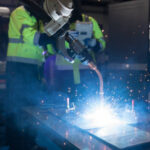
In heavy industries such as shipbuilding and construction machinery manufacturing, welding remains one of the most essential yet challenging processes. Large structural components, complex welding positions, long weld seams, and continuous high-current operations generate massive amounts of welding fumes. These fumes are not only dense and persistent but also highly dispersed due to open workspaces and frequent movement of operators and workpieces.
Traditional welding fume control methods often struggle in these environments. Fixed hoods lack flexibility, general ventilation systems dilute rather than capture pollutants, and standard welding fume collectors designed for light industrial or electronics applications fail to provide sufficient airflow and capture force. As a result, airborne particulate concentration remains high, worker exposure exceeds safety thresholds, and compliance with environmental and occupational health regulations becomes increasingly difficult.
From a product-oriented perspective, solving this problem requires a fundamental shift in fume control strategy. High-negative-pressure capture, combined with customized hood design and mobile purification units, provides a practical and scalable solution for large-scale welding scenarios. This article explores how PURE-AIR industrial fume purification equipment addresses the real challenges of heavy-duty welding through system-level design, workflow analysis, and high-performance solder fume extractor technology adapted for harsh industrial conditions.
The Unique Nature of Welding Fumes in Heavy Industries
Welding fumes generated in shipyards and construction machinery plants differ significantly from those produced in light manufacturing. First, the workpieces are large and often immobile. Welders must move around hull sections, frames, booms, and chassis components, performing welds in flat, vertical, overhead, and confined positions.
Second, the welding processes themselves are more intense. Flux-cored arc welding, submerged arc welding, and high-amperage MIG welding produce high volumes of fine particulate matter, metal oxides, and toxic gases. These fumes rise rapidly due to thermal buoyancy, then spread laterally across open spaces before conventional extraction systems can respond.
Third, production rhythm in heavy industry emphasizes flexibility. Workstations change frequently, layouts evolve as projects progress, and fixed infrastructure quickly becomes obsolete. Any effective welding fume extraction system must adapt to changing work zones without compromising capture efficiency.
These factors explain why standard solutions often fail and why high-negative-pressure capture becomes essential in heavy-duty environments.
Why Conventional Fume Extraction Falls Short
Many facilities initially rely on general exhaust ventilation or roof-mounted air exchange systems. While these systems reduce overall pollutant concentration, they do not prevent welders from inhaling fumes at the source. Dilution ventilation treats the symptom rather than the cause.
Other workshops install fixed arm welding fume collectors or canopy hoods. These solutions work well for benches or small assemblies, but lose effectiveness when the welding arc moves outside the optimal capture zone. In large-component welding, maintaining consistent hood positioning becomes unrealistic.
Moreover, insufficient negative pressure limits the capture radius. Without strong suction, fumes escape into the workspace before the extractor can collect them. This inefficiency increases filter loading, energy consumption, and maintenance costs without delivering meaningful health protection.
Therefore, heavy industry requires a different approach—one that prioritizes capture force, adaptability, and integration with actual production workflows.
The Principle of High-Negative-Pressure Capture
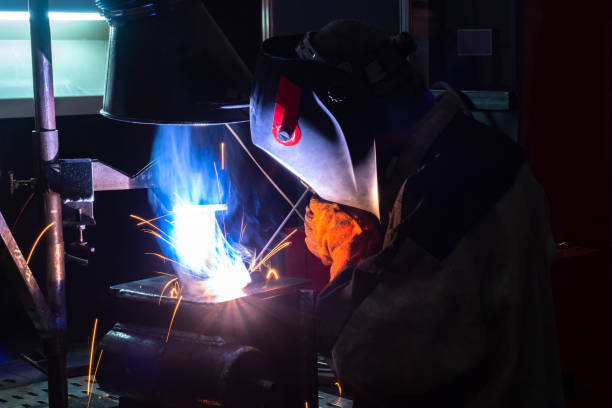
High-negative-pressure capture focuses on generating sufficient suction velocity at the fume generation point to overcome thermal rise and ambient air currents. Instead of relying on large airflow volumes alone, the system concentrates negative pressure where it matters most.
In practical terms, this approach uses powerful fans, optimized ducting, and specially designed hood inlets to create a strong localized vacuum. When properly implemented, welding fumes enter the extraction system immediately after formation, reducing dispersion and exposure.
For PURE-AIR industrial systems, this principle extends beyond fan selection. It influences the entire product architecture, from hood geometry to filtration stages and mobility design. By treating high-negative-pressure capture as a system rather than a component, these solutions deliver consistent performance in demanding environments.
Customized Hood Design for Large Welding Structures
Hood design plays a decisive role in capture efficiency. In shipbuilding and construction machinery applications, no single hood shape fits all scenarios. Flat panels, curved hull sections, box structures, and tubular frames each produce different fume flow patterns.
Customized hood design addresses this variability. By adjusting inlet size, shape, and angle, the hood aligns with the natural movement of welding fumes. For example, elongated slot hoods work well along long weld seams, while flared rectangular hoods suit wide-area welding on plates and frames.
Additionally, reinforced hood materials withstand sparks, spatter, and radiant heat common in heavy welding. PURE-AIR designs emphasize durability without sacrificing airflow performance. The result is a hood that remains effective and structurally sound over extended production cycles.
Through customization, welding fume collectors evolve from generic devices into task-specific capture tools, significantly improving real-world efficiency.
Mobile Purification Units: Flexibility Without Compromise
Mobility represents another critical factor in heavy-industry fume control. Fixed systems struggle to keep pace with dynamic production layouts. Mobile welding fume extractors solve this problem by bringing capture capability directly to the worksite.
PURE-AIR mobile units integrate high-negative-pressure fans, multi-stage filtration, and robust casters into a compact footprint. Operators can reposition the system quickly as work progresses, maintaining optimal capture distance without interrupting production.
Despite their mobility, these units do not sacrifice performance. High-efficiency filters remove fine particulates and hazardous compounds, while intelligent pressure monitoring ensures stable suction even as filters load. In this way, mobile welding fume collectors deliver industrial-grade performance with unmatched flexibility.
Workflow Analysis as a Capture Efficiency Multiplier
Equipment alone cannot solve fume control challenges. Understanding how welders move, how parts flow through the workshop, and where fumes concentrate over time is equally important.
Workflow analysis identifies high-exposure zones, frequent welding positions, and movement patterns. By mapping these factors, engineers can determine optimal extractor placement, hood orientation, and movement paths for mobile units.
For example, in ship section fabrication, welders often work sequentially along structural ribs. Positioning a mobile high-negative-pressure extractor to follow this sequence reduces repositioning time and maintains consistent capture performance. Similarly, in construction machinery assembly lines, aligning extractor deployment with takt time minimizes disruption.
When workflow analysis informs equipment deployment, capture efficiency increases without additional energy consumption. This integration transforms welding fume collectors from standalone products into productivity-enhancing tools.
Filtration Performance Under Heavy-Duty Conditions
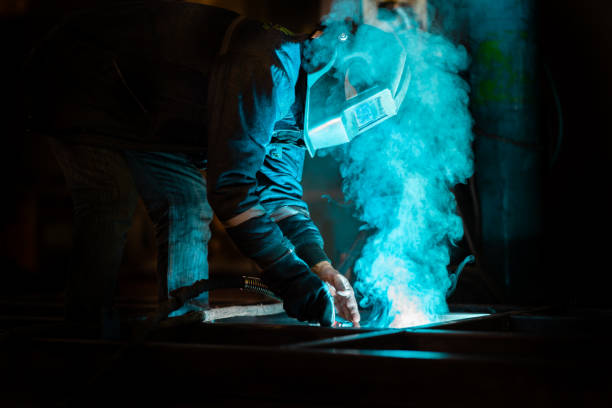
High-negative-pressure capture brings large volumes of contaminated air into the system. Effective filtration therefore, becomes essential to maintain performance and comply with environmental standards.
PURE-AIR systems typically employ multi-stage filtration. Spark arrestors and pre-filters handle large particles and hot debris, protecting downstream components. High-efficiency cartridge filters then capture fine particulate matter, including respirable metal fumes.
Filter media selection balances efficiency and durability. In heavy welding applications, filters must withstand continuous loading without a rapid pressure drop. Advanced surface-treated media extend service life and maintain stable airflow, reducing downtime and operating costs.
Through this filtration architecture, welding fume collectors achieve both high capture efficiency and long-term reliability.
Energy Efficiency and System Stability
High-negative-pressure systems often raise concerns about energy consumption. However, modern design mitigates this issue through efficient motors, optimized airflow paths, and intelligent controls.
Variable-frequency drives adjust fan speed based on real-time demand, preventing unnecessary energy use. Pressure sensors detect filter loading and compensate automatically, maintaining capture performance without overworking the system.
As a result, high-negative-pressure welding fume collectors deliver powerful suction while keeping operating costs under control. This balance proves essential for heavy industries operating multiple shifts and large-scale facilities.
Compliance, Safety, and Long-Term Value
Regulatory pressure on welding fume exposure continues to increase worldwide. Heavy industries face stricter limits on particulate concentration and worker exposure duration. High-negative-pressure capture systems help facilities meet these requirements proactively.
By capturing fumes at the source, these systems reduce ambient contamination and improve air quality across the workshop. Workers benefit from clearer visibility, reduced respiratory risk, and improved comfort, which in turn supports productivity and retention.
From a long-term investment perspective, robust welding fume collectors reduce hidden costs associated with absenteeism, equipment corrosion, and regulatory penalties. They also enhance corporate responsibility profiles, an increasingly important factor in global supply chains.
Conclusion
Heavy-industry welding presents some of the most demanding fume control challenges in modern manufacturing. Large workpieces, high-intensity processes, and dynamic workflows render conventional extraction methods insufficient. In this context, high-negative-pressure capture emerges as a decisive solution.
Through customized hood design, mobile purification units, and workflow-informed deployment, advanced welding fume collectors achieve effective source capture even in open and complex environments. When combined with robust filtration and intelligent control, these systems provide reliable, energy-efficient performance over the long term.
For shipbuilding and construction machinery manufacturers seeking practical, scalable, and compliant fume control solutions, high-negative-pressure capture represents not just an upgrade but a necessary evolution. By aligning product design with real-world welding conditions, PURE-AIR helps heavy industries breathe cleaner air while maintaining productivity and precision.