Why Air Filtration Efficiency Matters in Modern Laser Cutting Factories
In modern manufacturing, laser cutting technology has become essential for industries that demand precision and productivity. From automotive parts to metal fabrication and electronics, laser cutting delivers speed and accuracy. However, behind the precision lies a growing environmental and health challenge—airborne particulates and fumes generated during the cutting process. Addressing these pollutants through an efficient dust collection system design is not only a regulatory requirement but a cornerstone of safe and sustainable industrial operations.
1. The Air Quality Challenge in Laser Cutting Workshops
Laser cutting involves high-temperature vaporization and melting of materials, releasing a complex mixture of fine metal particles, smoke, and chemical gases. These emissions vary depending on the material—steel, aluminum, or acrylic—but all share one common characteristic: they pose a serious threat to indoor air quality.
In a closed industrial setting, microscopic particulates can accumulate rapidly. Without proper extraction, operators are exposed to respiratory hazards, and sensitive laser optics can suffer from contamination. Moreover, floating dust particles can interfere with machine sensors, reducing cutting precision and operational reliability.
Therefore, effective air filtration is more than environmental compliance—it directly influences productivity and long-term equipment performance.
2. The Role of Efficient Dust Collection System Design
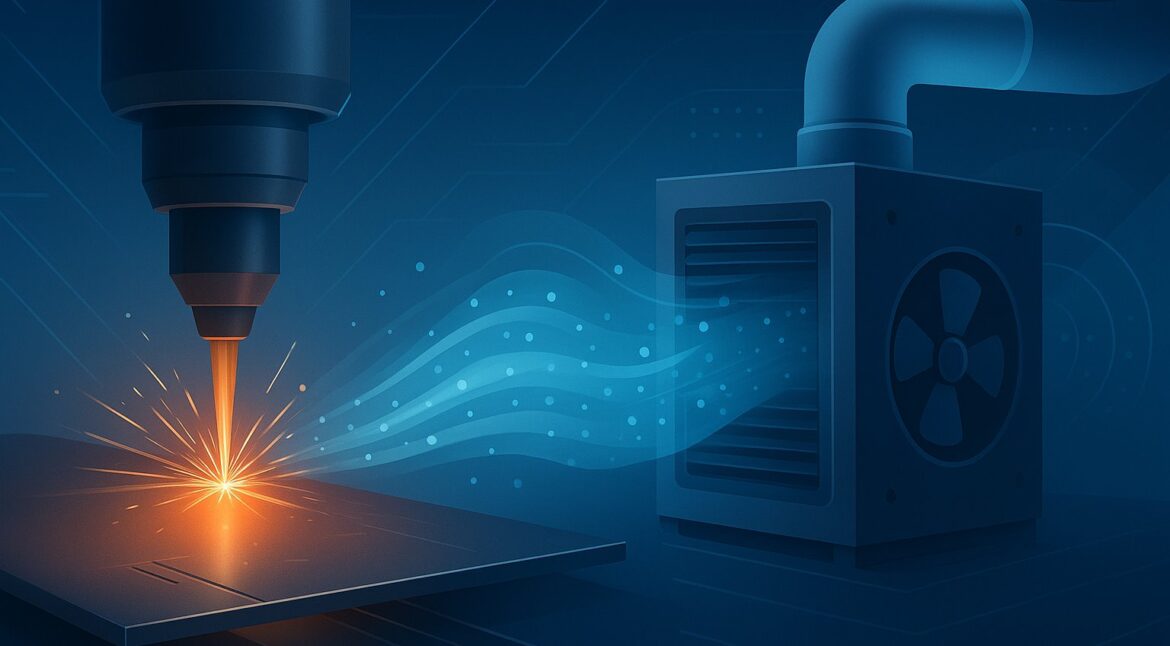
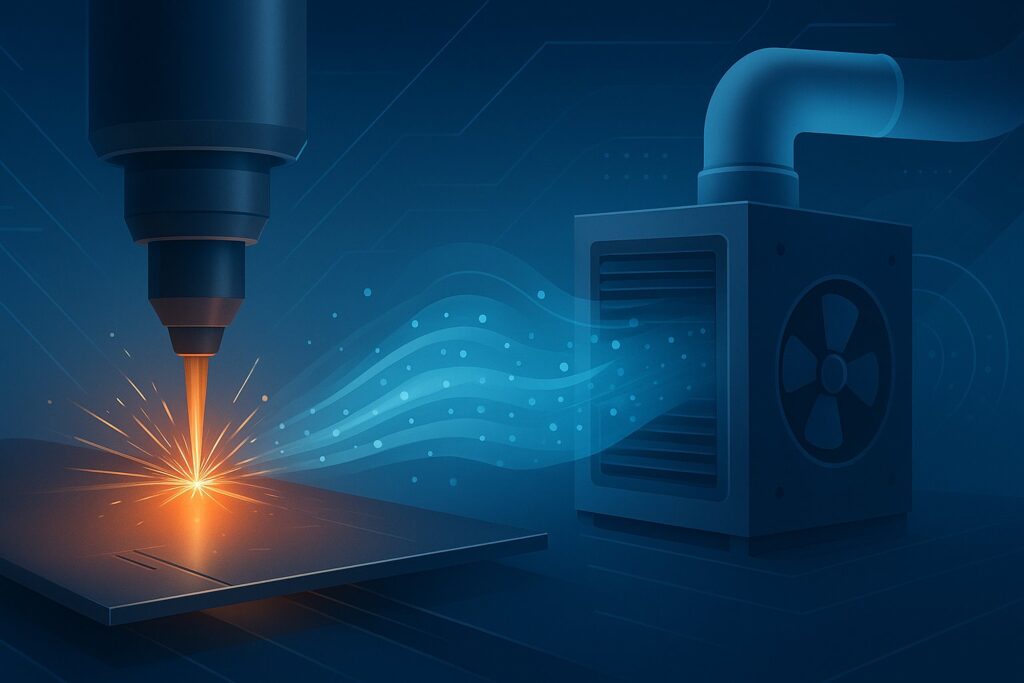
An advanced dust collection system design combines mechanical engineering, fluid dynamics, and filtration science to capture airborne contaminants at the source. In laser cutting factories, this typically includes:
-
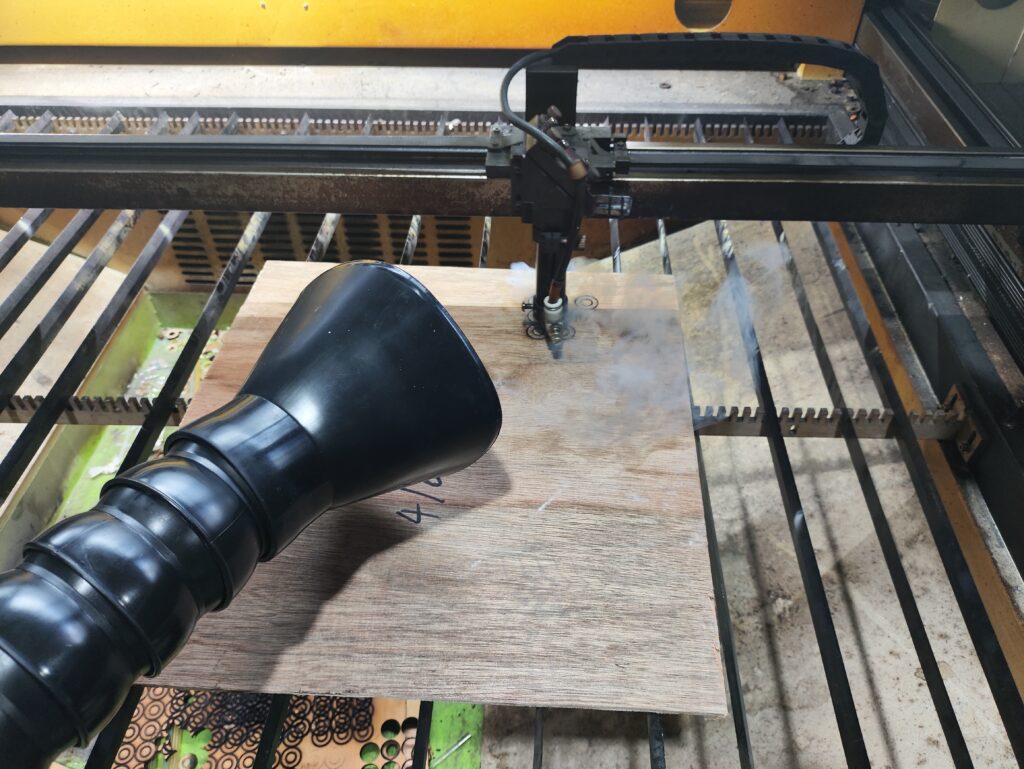
Capture mechanisms, such as downdraft tables or enclosed extraction hoods, pull pollutants from the cutting zone before dispersion.
-
Filtration units, which separate particulates and fumes using advanced multi-stage technologies.
-
Airflow management systems that maintain stable negative pressure and optimize air circulation efficiency.
The goal is not just containment but purification—ensuring that the air re-entering the workspace meets industrial hygiene standards.
Modern designs often integrate real-time monitoring to track filter saturation levels and airflow rates, enabling predictive maintenance and minimizing downtime.
3. HEPA Filtration: Precision in Micron-Level Dust Capture
One of the most important advances in industrial air purification is the use of HEPA (High-Efficiency Particulate Air) filters. These filters can trap particles as small as 0.3 microns with an efficiency of up to 99.97%.
In laser cutting, where submicron metallic dust and fume residues are prevalent, HEPA filtration ensures a high level of protection. The multi-layered fiber structure creates a tortuous path that captures even the smallest particles through diffusion and interception.
This technology not only enhances workplace air quality but also contributes to longer equipment life. Clean air reduces the risk of optical lens fouling, leading to fewer maintenance interruptions and consistent cutting performance.
4. Electrostatic Precipitation for High-Volume Industrial Applications
While HEPA filters are ideal for fine dust, large-scale laser cutting lines often rely on electrostatic precipitators (ESPs) for volume efficiency. ESPs operate by ionizing airborne particles and collecting them on charged plates.
This method excels in removing oily smoke, vaporized metallic residues, and carbonized particles—common byproducts in laser cutting stainless steel or coated materials. Electrostatic systems are favored for their low resistance and high airflow capacity, making them suitable for continuous production environments.
Moreover, many factories integrate hybrid systems, combining HEPA and electrostatic technologies to achieve layered filtration—capturing coarse particles first, then filtering finer dust downstream.
5. Environmental and Energy Considerations
Modern industrial design emphasizes not just filtration efficiency but also energy optimization. Traditional systems that rely solely on high-powered fans can lead to excessive energy consumption.
Newer intelligent dust collection systems use variable frequency drives (VFDs) and airflow sensors to adjust suction power dynamically based on emission levels. This results in significant energy savings and reduced operational costs.
Additionally, reusable or self-cleaning filters extend service intervals, minimizing waste and promoting sustainability. As industries adopt carbon-neutral manufacturing goals, optimizing filtration energy use becomes an integral part of green factory design.
6. Compliance and Worker Health Protection
International regulations, such as OSHA (Occupational Safety and Health Administration) and EU Directive 2004/37/EC, set strict exposure limits for airborne particulates and toxic substances. Laser cutting often releases chromium, nickel, and manganese compounds, which can have long-term health impacts.
An efficient dust collection system design ensures compliance with these standards by maintaining particulate concentrations below regulatory thresholds. Beyond compliance, companies that prioritize air quality enhance their reputation, attract skilled workers, and reduce absenteeism caused by respiratory issues.
Ultimately, worker well-being translates directly into productivity and operational stability.
7. Maintenance and System Longevity
Even the most advanced air filtration system requires consistent maintenance. Regular inspection of filters, ducts, and sensors ensures that performance remains stable over time. Predictive maintenance tools—such as pressure drop sensors—enable operators to anticipate filter replacement before efficiency declines.
Manufacturers increasingly use modular filter cartridges for quick swapping, reducing downtime during service. In environments where laser cutting is continuous, system reliability is crucial. A well-maintained air filtration unit can operate efficiently for years with minimal degradation.
Conclusion: Clean Air as a Competitive Edge
In modern laser cutting factories, air filtration efficiency is not an auxiliary function—it is an operational necessity. From protecting human health to ensuring precision manufacturing and sustainability, efficient dust collection system design serves as the foundation for long-term success.
HEPA and electrostatic technologies represent more than compliance tools; they embody the industry’s shift toward intelligent, energy-efficient, and eco-conscious production. Companies that invest in advanced air purification are not only improving air quality but also future-proofing their operations in an increasingly competitive and regulated industrial landscape.