Pleated dust filter solutions play a central role in modern industrial dust collection. As production environments grow more complex, filtration demands continue to rise. Industries now face finer particles, higher airflow, and continuous-duty operations that strain conventional filter media. Because of these challenges, the choice of filter material becomes a defining factor in the performance of any dust extraction system. A deeper understanding of nanofiber media, polyester blends, PTFE membranes, and composite structures helps users select filters that deliver consistent, long-term results.
Pleated filters offer a higher surface area compared to traditional flat filters, allowing stronger airflow with lower pressure drop. This design also improves dust release and extends filter life. However, the true performance of pleated dust filter solutions relies on the science behind their material composition. Each category—nanofiber, polyester, PTFE, cellulose blends, and hybrid media—provides unique advantages. Understanding these differences helps industrial operators choose materials that match dust types, airflow demands, and regulatory requirements.
Why Filter Media Matter in Pleated Dust Filter Solutions
The media inside a pleated filter determines its filtration efficiency, dust-loading capacity, and operational stability. As airflow enters the filter, contaminants interact with multiple layers of fibers. The physical and chemical properties of those fibers influence how well the filter blocks particles, resists wear, handles moisture, and recovers after pulse cleaning. Even small changes in fiber diameter or surface treatment can affect the overall performance of a dust collector.
Moreover, industries now process finer particles than ever before. Pharmaceutical powders, welding fumes, metal dust, and food additives require highly efficient filtration. Therefore, pleated dust filter solutions must balance dust capture efficiency with airflow resistance. Choosing the correct media ensures stable system operation, reduced energy usage, and longer filter life. This balance becomes even more critical in high-demand applications where downtime causes significant losses.
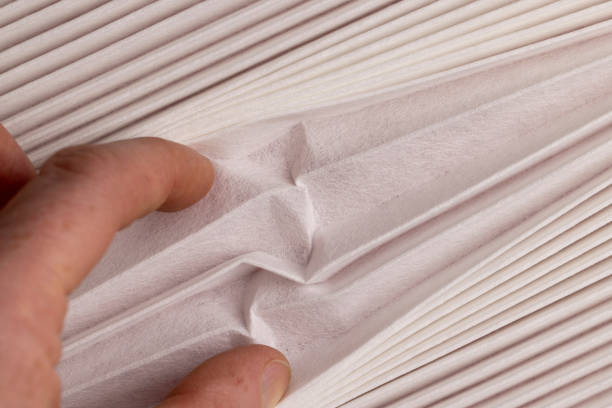
Understanding the Core Materials in Pleated Dust Filters
Nanofiber Media: Precision Filtration at the Microscopic Level
Nanofiber media have transformed modern pleated dust filter solutions. These ultra-fine fibers, often less than 0.3 microns in diameter, form a uniform web over a base substrate. This micro-layer captures fine particles on the surface rather than deep inside the filter. Surface filtration reduces dust penetration, improves pulse cleaning performance, and extends operational life.
Because nanofiber layers create a smooth filtration surface, they maintain low pressure drop even as dust accumulates. This stability reduces energy consumption, especially in high-airflow dust collection systems. Moreover, nanofiber media handle fine particulates such as welding fumes, solder smoke, powder coating pigments, and pharmaceutical dusts. Their ability to resist fiber shedding also protects downstream equipment from contamination.
Despite their strength, nanofibers remain lightweight and flexible. This structure allows manufacturers to create pleated designs with narrow fold spacing, increasing filtration area without sacrificing airflow. As a result, nanofiber filters have become essential in applications that require high efficiency and long filter life.
Polyester Filter Media: Durable and Versatile for Industrial Use
Polyester remains one of the most widely used materials in pleated dust filter solutions. Its appeal comes from durability, moisture resistance, and mechanical strength. Polyester fibers maintain their structure under high airflow and strong pulse cleaning cycles. Because of this, polyester filters support continuous operation in harsh environments.
The polymer structure of polyester resists abrasion and retains its dimensional stability even when exposed to high dust loading. Many industries, including woodworking, cement processing, food manufacturing, and plastics, rely on polyester filters for their predictable performance. Additionally, the surface of polyester fibers can be treated with anti-static agents, oil-repellent coatings, or hydrophobic layers. These enhancements improve performance in environments where static buildup or moisture would otherwise impair filtration.
Furthermore, polyester filters offer a cost-effective solution for general dust collection needs. They deliver a solid balance of efficiency, durability, and price, making them suitable for both small workshops and large industrial plants.
PTFE Membrane Media: Maximum Efficiency and Chemical Stability
PTFE (polytetrafluoroethylene) membrane media represent the highest tier in pleated dust filter solutions. These membranes provide exceptional filtration efficiency by forming a microporous surface that traps particles at the outermost layer. Because PTFE has an extremely low surface energy, dust releases easily during cleaning cycles. This feature ensures stable performance even in severe operating environments.
PTFE membranes resist acids, solvents, heat, and moisture, making them ideal for chemical processing, pharmaceutical production, food handling, and high-temperature applications. Their non-stick properties reduce dust adhesion, preventing pressure spikes that would otherwise strain dust collection systems.
While PTFE filters cost more than polyester or cellulose, they provide significant long-term advantages. Their long service life, stable airflow, and superior dust release reduce operating costs. PTFE membranes also support near-HEPA filtration performance when required. Because of this, PTFE membrane filters are often chosen for industries that must meet strict environmental or product purity standards.
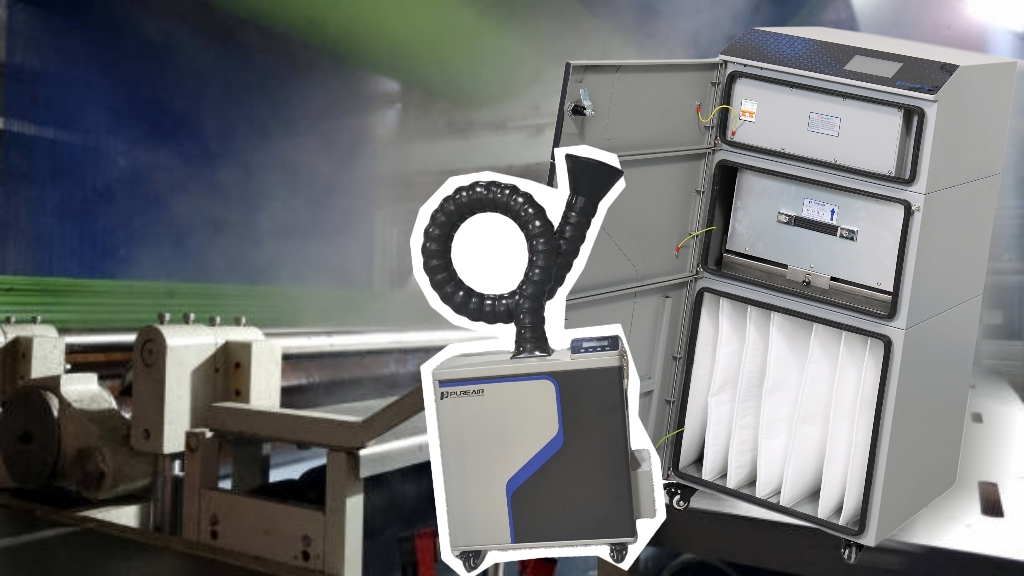
Cellulose and Cellulose-Blend Media: Economical Solutions with Balanced Performance
Cellulose media offer an economical option for pleated filters. Made from wood-based fibers, cellulose provides moderate efficiency and good dust-holding capacity. In dry environments, cellulose filters perform well with coarse to medium particles. However, cellulose absorbs moisture, which may reduce structural strength and increase airflow resistance.
To enhance performance, many manufacturers blend cellulose with synthetic fibers. These cellulose-polyester blends improve durability and moisture resistance while maintaining cost advantages. Blended media also handles pulse cleaning better than pure cellulose. As a result, this type of filter is suitable for moderate dust loads and non-aggressive environments.
Although cellulose blends do not match the fine-particle control of nanofiber or PTFE media, they offer a practical solution for many routine industrial applications.
Hybrid and Advanced Composite Filter Media
As industrial demands evolve, filter technology also advances. Hybrid media combine PTFE layers with polyester backings, or nanofiber coatings with composite substrates. These combinations deliver more balanced performance across efficiency, durability, moisture control, and cost.
Some composite materials integrate flame-retardant fibers, anti-static properties, or antimicrobial coatings. These enhancements support specialized environments such as metalworking facilities, food processing plants, and pharmaceutical clean rooms.
Composite media also optimize airflow distribution by reducing internal resistance. Because airflow moves more consistently through the filter, dust loads spread evenly, improving service life.
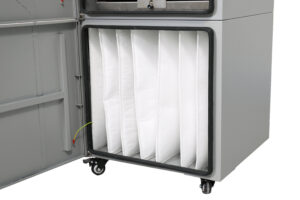 How Pleated Filter Structure Enhances Material Performance
Filter material alone does not define the performance of pleated dust filter solutions. The structural design of the pleats also plays a significant role. The spacing, depth, and stability of each fold influence airflow paths and dust accumulation behavior.
Narrow folds increase filtration surface area but must remain strong enough to resist collapse. Wide folds improve dust release but reduce surface area. Engineers design pleated structures to match each material’s characteristics. For instance, nanofiber media benefit from tight spacing, while PTFE membranes perform well with broader pleats that support airflow.
Support mesh layers reinforce the structure, preventing pleat deformation during cleaning. These internal skeletons must balance durability and airflow to optimize long-term results.
Matching Filter Media to Industrial Applications
Choosing the correct pleated filter media requires understanding the characteristics of the dust being captured. Particle size, moisture content, static charge, and chemical composition all influence media selection.
Nanofiber filters excel with fine particulate. Polyester handles abrasion well. PTFE withstands chemicals and humidity. Cellulose blends fit budget-focused needs with moderate dust loads. Composite media serve environments that require balanced performance.
Selecting the right media reduces operational costs, stabilizes airflow, and improves workplace safety. Because dust collection systems form part of environmental compliance strategies, material selection directly affects regulatory performance as well.
Conclusion: A Strategic Approach to Pleated Dust Filter Materials
Pleated dust filter solutions rely on advanced material science to achieve high performance in demanding industrial environments. Nanofiber media offer superior fine-particle capture. Polyester provides strength and durability. PTFE membranes deliver unmatched chemical resistance and surface filtration. Cellulose blends offer cost-efficient performance for moderate applications. Composite materials combine these advantages for specialized use.
Choosing the right filter media ensures stable airflow, long filter life, efficient cleaning, and reliable dust control. As industrial challenges grow more complex, understanding filtration materials becomes essential. A strategic selection of pleated dust filter solutions helps companies maintain cleaner air, reduce maintenance demands, and meet modern environmental standards.