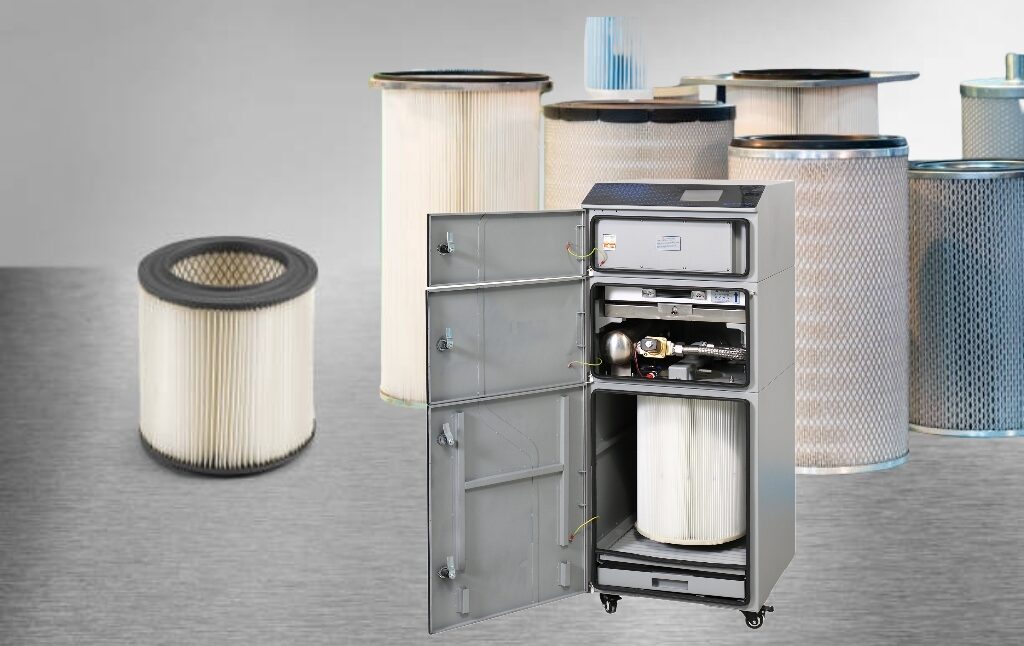
Airborne fumes have become a major concern in modern industrial environments. Manufacturing lines, welding stations, laser processing rooms, and electronics assembly areas release complex aerosols that contain ultra-fine particles. These particles often measure far below one micron and can easily enter sensitive equipment or the human respiratory system. Therefore, industries increasingly rely on advanced HEPA fume filtration systems to maintain clean and controlled workspaces. These systems use engineered science, multi-stage designs, and precise airflow control to capture dangerous particles before they enter the workplace air.
A HEPA filtration unit does more than pull air through a dense filter. It uses coordinated technologies that work together to deliver high capture efficiency. The system manages airflow, uses smart structural design, and relies on engineered fibers to trap particles of nearly invisible scale. This combination ensures stable performance even in demanding operations. By looking inside the system, we can see how each component contributes to deep filtration and long-term reliability.
How Airflow Shapes Filtration Performance
Clean air begins with the right airflow path. A HEPA fume filtration system pulls contaminated air through an inlet that shapes the flow into a controlled pattern. This pattern matters because ultra-fine particles respond to subtle changes in velocity and direction. As the air moves through the filtration chamber, smooth laminar flow reduces turbulence and prevents particle escape. The system channels air toward pre-filters that capture large debris and protect the HEPA media from early overload.
Airflow engineering also prevents pressure loss. A stable pressure level keeps contaminants moving into the filter rather than leaking into the workspace. Because fumes from soldering, welding, and laser cutting behave unpredictably, consistent airflow ensures complete capture. The system’s fan module, therefore, plays a critical role. It creates negative pressure, stabilizes velocity, and maintains air cleanliness even during heavy-duty tasks.
Moreover, controlled airflow reduces noise. Industrial operators often work near the filtration unit, so quiet operation enhances safety and comfort. Smooth airflow channels and optimized fan geometry keep sound levels low while preserving high filtration performance.
The Role of Pre-Filters in Particle Control
Before air reaches the main HEPA filter, it passes through one or more pre-filters. These layers remove dust, smoke clusters, and medium-sized particles. Pre-filters significantly extend HEPA lifespan because HEPA media can clog quickly when exposed to large debris. By capturing coarse particles early, pre-filters keep the system efficient and stable.
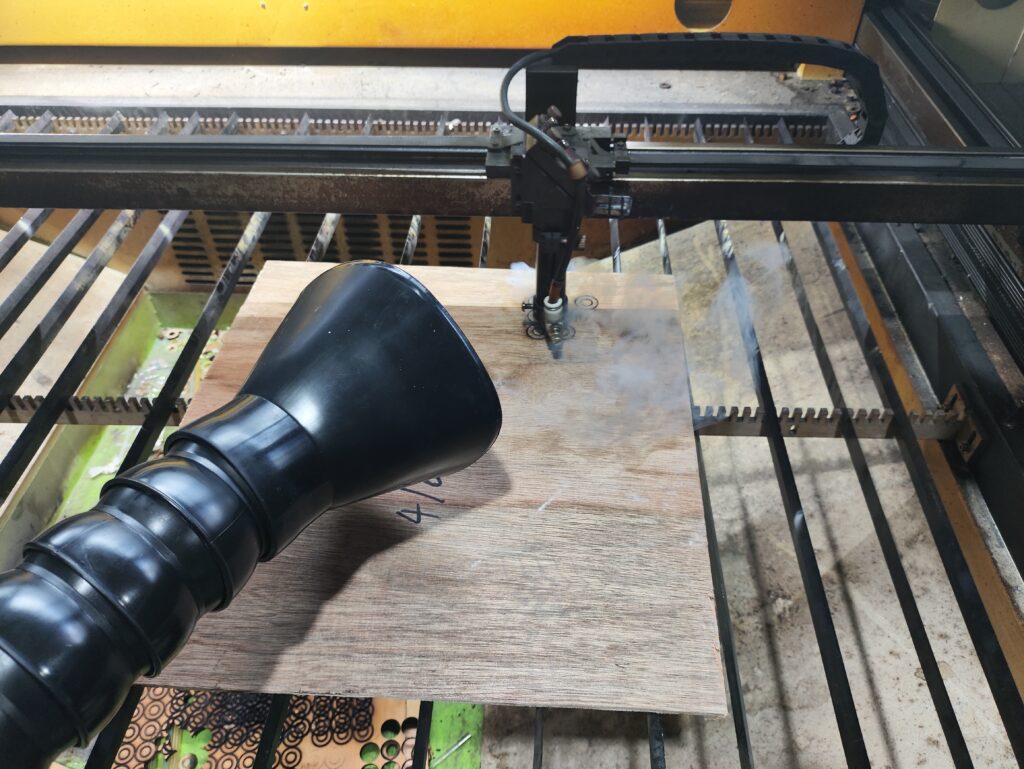
Different industries require different pre-filter materials. Laser cutting often generates sticky particles, so systems use coated media to prevent adhesion. Welding fumes contain metallic particles that can degrade filters, so durable pre-filter materials help protect the core filtration layer. Electronics soldering releases fine rosin smoke, which pre-filters trap before the HEPA layer handles the remaining micro-scale particles. This staged approach allows consistent performance across diverse applications.
Although pre-filters handle large debris, they also improve airflow uniformity. Clean flow entering the HEPA chamber improves capture efficiency and reduces the risk of bypass. This combination enhances the system’s long-term stability and protects operators from hazardous emissions.
HEPA Media: The Heart of Ultra-Fine Particle Capture
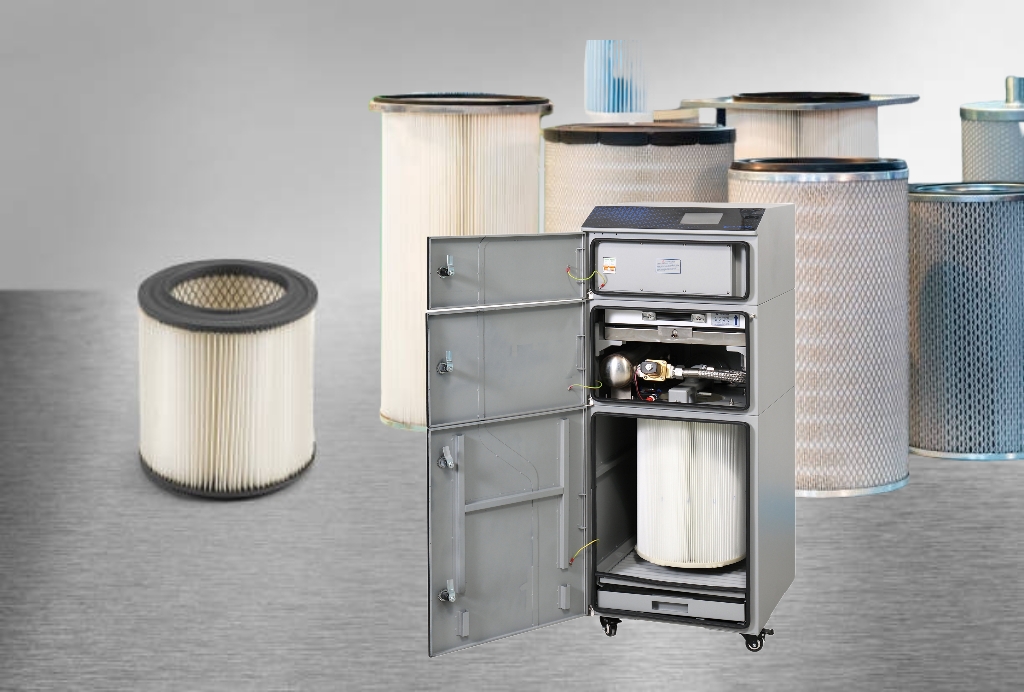
At the core of a HEPA fume filtration system lies the HEPA filter itself. Unlike simple mesh screens, HEPA media uses a dense matrix of microfibers arranged in a complex pattern. These fibers trap particles through multiple mechanisms. First, interception captures particles that move close to a fiber. Second, impaction traps heavier particles as they collide with the fiber structure. Third, diffusion stops ultra-fine particles that drift randomly due to Brownian motion. These three mechanisms work together to achieve extremely high capture efficiency.
Although many people believe HEPA filters block particles strictly through fine mesh, the science is more dynamic. The filter’s structure does not rely on tight spacing alone. Instead, particles become trapped due to the airflow behavior around the fibers. This design allows HEPA filters to maintain strong airflow even at high efficiency. Because of this balance, HEPA filtration protects operators from fumes without slowing industrial processes.
In a high-performance system, the HEPA media often includes additional sealing structures. These seals prevent leaks around the frame, ensuring that all incoming air passes through the filter. Without a complete seal, particles could bypass the media and reduce the system’s efficiency. Proper sealing, therefore, ensures integrity across the entire filtration cycle.
Electrostatic Effects and Aerosol Behavior
Ultra-fine particles behave differently from visible dust. Many particles in fumes carry an electrical charge. As air moves through the HEPA filter, these particles respond to the electrostatic field generated by the fibers. Charged particles become attracted to or repelled by the fiber surfaces, increasing the likelihood of capture. This natural electrostatic effect enhances filtration performance without the need for additional energy consumption.
However, electrostatic charge can also shift over time due to humidity or particle type. Engineers design HEPA media to maintain stable performance even when electrostatic effects change. Fibers remain effective at capturing particles through mechanical means, ensuring reliable performance across diverse environments.
Particle behavior also varies by airflow speed. Faster air can reduce capture efficiency if not controlled, but HEPA systems maintain balanced flow. By combining airflow engineering with fiber design, the system captures particles that are invisible to the naked eye.
Activated Carbon: Managing Odor and Chemical Vapors
Although HEPA filters excel at capturing solid and liquid aerosols, they cannot remove volatile gases. Therefore, most HEPA fume filtration systems include activated carbon filters. These filters use porous carbon granules that trap odors, vapors, and chemical fumes through adsorption. This process removes harmful molecules that would otherwise pass through the HEPA layer unchanged.
Activated carbon plays an essential role in environments with chemical bonding agents, laser smoke, or resin-based materials. Gas molecules enter the carbon pores and attach to the surface area inside. Because carbon has a massive internal surface area, it can store large quantities of contaminants without losing airflow performance.
Activated carbon also stabilizes air quality over time. It reduces workplace odor, protects sensitive electronics, and ensures operator comfort. Combined with HEPA filtration, it creates a complete fume-control solution that handles solid particles and gaseous pollutants simultaneously.
Structural Design and System Durability
A HEPA fume filtration system must withstand long operating cycles in demanding conditions. Therefore, engineers reinforce the system’s internal structure. Filter chambers use rigid frames that maintain shape even under pressure fluctuations. Vibration reduction systems keep internal components stable, which protects gaskets, seals, and filter media.
Durability becomes even more important in environments with continuous welding or heavy laser use. These tasks generate heat and airborne contaminants that challenge the filtration unit. Because of this, systems use heat-resistant housings, high-grade seals, and corrosion-proof materials. This structure ensures that performance remains stable over time.
The design also facilitates easy maintenance. Technicians can replace filters through accessible panels without disassembling the entire unit. This modular structure reduces downtime and improves operational efficiency.
Intelligent Monitoring and System Automation
Modern filtration units use sensors to monitor airflow, filter condition, and particle load. These sensors provide real-time feedback that helps operators maintain peak performance. For instance, airflow sensors detect blockages early. When pre-filters become saturated, the system alerts the operator to replace them. This prevents pressure drops that could reduce HEPA performance.
Automated controls adjust fan speed to maintain consistent airflow. This feature ensures that the system delivers stable filtration even as filters accumulate debris. Intelligent monitoring reduces energy waste, extends component longevity, and improves workplace safety.
Conclusion
A modern HEPA fume filtration system uses advanced engineering to deliver high-efficiency particle capture. Airflow control, pre-filter layers, HEPA media, activated carbon beds, and structural reinforcement work together to create a safe and clean workspace. These systems remove ultra-fine particles that would otherwise pose health risks or damage sensitive equipment. As industrial processes evolve, HEPA filtration technology continues to improve through intelligent sensors, enhanced materials, and better airflow engineering. This combination of science and engineering ensures reliable performance and long-term value.