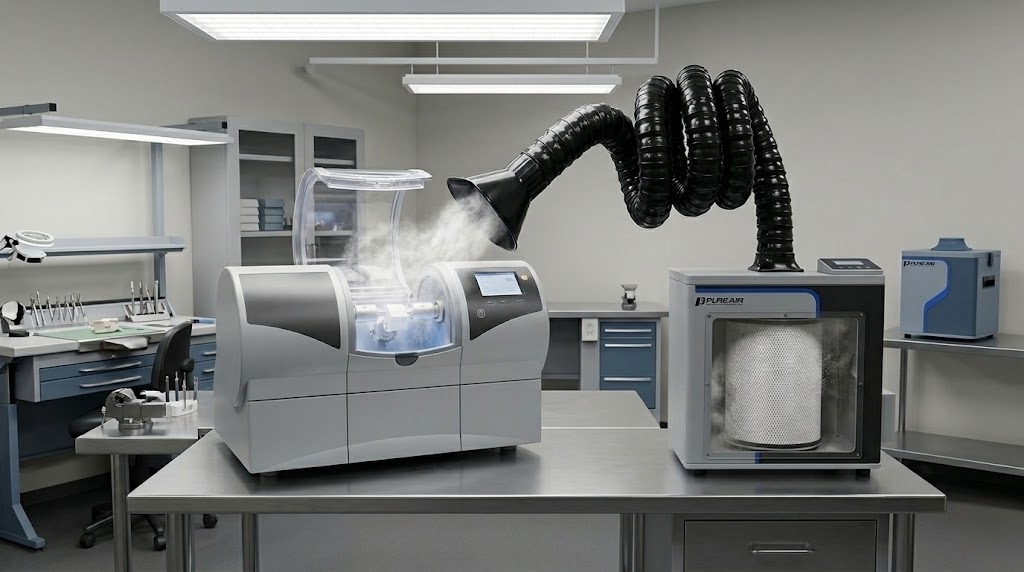
Precision is the lifeblood of every modern dental laboratory. High-speed zirconia milling creates incredibly fine and abrasive dust particles. However, many technicians struggle with sudden suction loss during production. The secret to consistent performance lies deep within your filtration system. Specifically, using a specialized dust collector for dental milling prevents costly workflow interruptions. This guide explores why PTFE membranes outperform standard polyester in dental environments. We help you eliminate dust clogs and protect your expensive milling equipment.
1. The Zirconia Challenge: Why Standard Filters Fail
2. The PTFE Solution: The Science of Non-Stick Surfaces
A dust collector for dental milling equipped with PTFE technology offers a superior defense.
Low Surface Energy Barriers
PTFE (Polytetrafluoroethylene) membranes feature an incredibly low surface energy. Consequently, the zirconia dust cannot find a foothold to stick to the filter. Furthermore, the membrane creates a “surface-loading” effect for all captured debris. This means the dust stays on the outside rather than entering the fibers. Therefore, the air continues to flow freely through the filter even during heavy use.
Pulse-Jet Cleaning Efficiency
Modern systems use compressed air to “pulse” and clean the filters automatically. Consequently, the non-stick PTFE surface allows the dust cake to drop off instantly. Standard filters often retain dust even after a strong air pulse. Furthermore, the smooth membrane prevents the microscopic “stabbing” of abrasive zirconia particles. Therefore, your filter stays clean and functional for a much longer period.
3. Performance Comparison: PTFE vs. Standard Polyester
Investing in the right technology provides a measurable return on investment.
| Feature | Standard Polyester Filter | PTFE Membrane Filter |
| Dust Adhesion | High (Sticky) | Extremely Low (Slick) |
| Cleaning Method | Manual / Weak Pulse | Highly Effective Auto-Pulse |
| Service Life | 3 – 6 Months | 18 – 30 Months |
| Airflow Stability | Drops rapidly | Remains constant |
Consequently, you reduce the frequency of filter replacements significantly. A professional dust collector for dental milling lowers your long-term maintenance costs. Furthermore, constant airflow ensures that your milling chamber remains perfectly clean. Therefore, you protect the high-precision spindles and sensors from abrasive wear.
Conclusion: Pure Air for Precision Results
A high-performing dental lab begins with a clean, controlled, and reliable production environment. Instead of constantly dealing with clogged filters and unexpected downtime that disrupts your milling workflow, it’s time to upgrade your approach. By integrating professional PTFE membrane technology, you actively prevent dust adhesion and significantly improve filtration efficiency.
As a result, your extraction system maintains peak performance over extended periods, reducing maintenance frequency and maximizing operational uptime. Moreover, this advanced non-stick filtration capability ensures consistent airflow and stable working conditions, which are essential for precision dental milling.
Furthermore, an optimized dust collector specifically designed for dental applications delivers the reliability and protection your lab truly needs. It not only safeguards your equipment from fine particulate buildup but also protects the health of your team by maintaining cleaner air quality.
Now is the time to move toward a more efficient and professional workspace. With the right technology in place, you create a cleaner environment, improve productivity, and ensure long-term performance—because both your equipment and your lungs deserve the highest level of protection.
Look at our Facebook: https://www.facebook.com/pureairen