Print shop managers and digital imaging supervisors frequently face a pair of costly, frustrating production bottlenecks. Even when running premium wide-format equipment, operators constantly clean clogged printhead nozzles and reject high-resolution graphics because of tiny surface specks or blurry edge details. To fix these issues, technicians typically waste hours running intensive head-flushing cycles or adjusting ink temperatures.
However, they usually overlook the true root cause of these defects because it floats invisibly right inside the print cabinet. The real culprit is the airborne cloud of aerosolized fine ink mist generated during high-speed printing operations. Integrating a specialized dust fume extraction system directly into your print line solves this issue completely. This engineering guide reveals how capturing these microscopic airborne particles protects delicate printhead nozzles and preserves razor-sharp details on 4K digital prints.
1. The Invisible Threat: How Airborne Ink Mist Destroys Uncured Prints
During high-velocity printing operations, rapid droplet ejection releases a fine, airborne ink aerosol into the print chamber. This microscopic mist hangs suspended in the air right above the moving carriage.
 Suspended Ink Mist ──> Attracted by UV Static/Heat ──> Falls Onto Wet Media ──> ❌ Sharpness Loss & Specks
 Suspended Ink Mist ──> Pulled into Fume Extractor   ──> Clean Print Cabinet    ──> ♻️ Razor-Sharp 4K Graphics
If you operate your equipment without a dedicated dust fume extraction system, static electricity and heat from the UV curing lamps create a powerful pull. This thermal force pulls the floating ink mist and airborne ambient dust back down onto the wet, uncured surface of your print media.
Consequently, these falling particles contaminate the wet ink layer right before the UV lamps cure it into a solid film. This contamination forms tiny, sand-like bumps on your prints, creating noticeable texture defects on flat color fields. Furthermore, this floating overspray clouds the optical path of the printheads, turning crisp, clean typography into blurry, low-quality text.
2. Preventing Printhead Clogging: Protecting the Nozzle Plate Assembly
Beyond ruining the look of your prints, unmanaged ink vapor also damages your expensive printhead infrastructure directly.
                  Printhead Contamination Profile:
 ┌──────────────────────────────────────────────────────────────────────┐
 │ Unmanaged Mist: Settles on nozzle plate, cures, blocks channels. ($) │
 ├──────────────────────────────────────────────────────────────────────┤
 │ Active Extraction: Keeps nozzle plates clean, extending head life. (0)│
 └──────────────────────────────────────────────────────────────────────┘
The fine mist floating inside the print cabinet eventually settles on the cold metal nozzle plates of the printheads. As the UV lamp passes back and forth, stray reflected light cures this stray residue directly onto the nozzle openings.
This cured ink buildup blocks the tiny micro-nozzles, which deflects the ink drops or stops them from firing entirely. Therefore, operators must run frequent, aggressive manual cleaning cycles to clear the blocks, which shortens printhead life and wastes expensive ink. Running a high-capacity dust fume extraction system draws these sticky vapors away from the printhead assembly instantly, stopping cured buildup before it can block the ink channels.
3. The FS-i Advantage: Maximizing Production Yields with 99.99% Air Purification
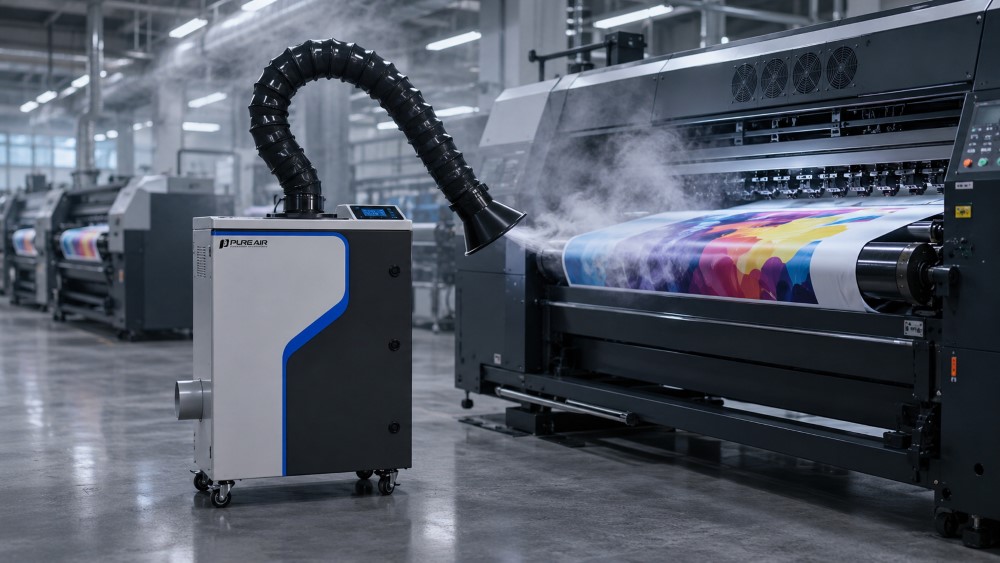
Deploying an advanced extraction platform like our FS-i series ensures your production line maintains a clean, controlled print environment.
 Contaminated Chamber ──> Nozzle Deflection & Specks ──> High Rejection Rates ──> ❌ Lost Profits
 FS-i Extractor Enclosure ──> Clean Airflow Pathway  ──> Perfect Droplet Flight ──> ♻️ Maximized ROI
Standard ventilation systems merely stir the air inside your shop, which can actually blow dust particles into your open print zones. Conversely, the FS-i series operates an intensive multi-stage filtration circuit that achieves a 99.99% efficiency rating against microscopic dust and fine ink mist.
By pulling air cleanly from the print area, this system purifies the environment around the media path. This active extraction allows ink droplets to travel perfectly from the nozzle to the media without hitting airborne mist or dust. As a result, you eliminate surface specks, reduce your print rejection rates, and keep your 4K graphics perfectly crisp.
Print Chamber Micro-Environment Comparison
| Critical Operational Metric | Unmanaged Open Printing Chamber | FS-i High-Efficiency Extraction Chamber |
| Air Filtration Efficiency | Low; ambient dust and mist recirculate | 99.99% purification via multi-stage filters |
| Printhead Clogging Frequency | High; stray mist cures on nozzle plates | Very low; clean air currents keep nozzles clear |
| Image Edge Sharpness (4K) | Blurry; ink mist creates edge halos | Razor-sharp detail; zero mist interference |
| Material Scrap Rate | High surface bumps require reprints | Minimized; clean media yields smooth graphics |
| UV Lamp Window Clearness | Foggy or mist requires frequent cleaning | Crystal clear; extends UV lamp service life |
Conclusion: Elevate Your Production Standards
Long-term printing success depends on reliable equipment and consistent production quality. Fine ink mist can reduce print quality and increase maintenance costs over time. Therefore, an efficient dust fume extraction system helps protect printheads and other critical components. It also maintains stable airflow throughout the printing process. As a result, your equipment operates more efficiently and delivers consistent print quality. Whether you run UV, solvent, or wide-format printers, proper air filtration supports cleaner production and longer equipment life.
Contact our engineering team to find the right extraction solution for your printing application.