How Metal Cutting Processes Generate Harmful Fumes and Dust
Introduction
Metal cutting is a fundamental manufacturing process widely used across industries such as automotive, aerospace, shipbuilding, construction machinery, metal fabrication, and precision engineering. Modern cutting technologies—including laser cutting, plasma cutting, flame cutting, and mechanical cutting—have significantly improved production efficiency and precision.
However, alongside these advantages comes an often-overlooked challenge: the generation of harmful fumes, smoke, and fine dust particles. These airborne contaminants can negatively affect worker health, damage equipment, reduce product quality, and create compliance issues with environmental regulations.
Understanding how metal cutting processes generate fumes and dust is the first step toward implementing effective air purification and fume extraction solutions.
Why Metal Cutting Produces Airborne Contaminants
Metal cutting involves removing material through thermal energy, mechanical force, or a combination of both. During this process, the material is heated, melted, vaporized, fractured, or abraded, releasing particles and gases into the surrounding environment.
The type and quantity of airborne pollutants depend on several factors:
- Cutting technology used
- Material composition
- Cutting speed and temperature
- Surface coatings and treatments
- Workshop ventilation conditions
As industrial cutting technologies become faster and more powerful, the concentration of airborne contaminants also increases, making proper fume extraction more important than ever.
Laser Cutting: A Major Source of Fine Smoke and Metal Fumes
Laser cutting is one of the most widely used metal processing methods due to its high precision and productivity.
How Fumes Are Generated
Laser beams focus intense energy onto the metal surface, rapidly heating the material to melting or vaporization temperatures. During this process:
- Metal particles are vaporized
- Oxides are formed
- Coatings and paint layers may burn
- Smoke particles are released
Common Pollutants
Laser cutting typically generates:
- Ultra-fine particulate matter
- Metal oxide fumes
- Combustion by-products
- Volatile organic compounds (VOCs)
Many of these particles are microscopic and can remain suspended in the air for extended periods, increasing the risk of inhalation.
Plasma Cutting: High-Temperature Fume Generation
Plasma cutting uses a high-temperature plasma arc to melt and remove metal.
Characteristics of Plasma Cutting Emissions
Compared with laser cutting, plasma cutting generally produces:
- Larger volumes of smoke
- Higher particulate concentrations
- Greater heat output
The extremely high operating temperatures can create dense clouds of airborne contaminants.
Common Pollutants
- Iron oxide fumes
- Manganese-containing particles
- Ozone
- Nitrogen oxides
- Fine metal dust
Without effective extraction systems, these pollutants can quickly spread throughout the workshop.
Flame Cutting and Oxy-Fuel Cutting
Flame cutting relies on a combination of fuel gas and oxygen to cut thick metal plates.
Pollutants Generated
During combustion and metal oxidation, flame cutting produces:
- Combustion smoke
- Carbon particles
- Metal oxide fumes
- Heat-related airborne contaminants
Although particle generation may be less concentrated than plasma cutting, large-scale operations often produce significant cumulative emissions.
Mechanical Cutting and Grinding Operations
Not all air pollution in metal processing comes from thermal cutting.
Mechanical operations such as:
- Sawing
- Grinding
- Milling
- Deburring
- Surface finishing
generate substantial amounts of metal dust.
Common Characteristics
Unlike smoke, metal dust is often heavier and more visible. However, fine particles can still remain airborne and pose health risks.
Common materials include:
- Steel dust
- Aluminum dust
- Stainless steel particles
- Abrasive residues
These contaminants can accumulate on machinery and throughout the workshop environment.
Health Risks of Metal Cutting Fumes and Dust
Airborne contaminants generated during metal cutting can have serious effects on worker health.
Respiratory System Impact
Exposure to fine particulate matter may cause:
- Coughing
- Throat irritation
- Breathing discomfort
- Reduced lung function
Long-term exposure can increase occupational health risks.
Eye and Skin Irritation
Smoke and airborne particles may cause:
- Eye irritation
- Skin discomfort
- Reduced workplace comfort
Exposure to Hazardous Metals
Certain materials may release compounds containing:
- Chromium
- Nickel
- Zinc
- Manganese
These substances require careful control through proper source-capture extraction systems.
Impact on Equipment and Production Efficiency
The consequences of airborne contaminants extend beyond worker health.
Increased Equipment Maintenance
Dust and fumes can accumulate inside:
- CNC machines
- Laser cutting systems
- Electrical cabinets
- Sensors and control systems
This often leads to:
- Increased maintenance frequency
- Reduced equipment lifespan
- Unexpected downtime
Reduced Product Quality
Airborne particles may settle on finished products, causing:
- Surface contamination
- Coating defects
- Precision issues
Maintaining clean air directly contributes to product quality consistency.
Environmental and Regulatory Considerations
Many countries have implemented stricter environmental and workplace safety regulations regarding industrial air pollution.
Manufacturers are increasingly required to:
- Control particulate emissions
- Protect employee health
- Reduce environmental impact
- Maintain compliance with local standards
Professional fume extraction systems help facilities meet these requirements while improving overall operational performance.
The Importance of Source-Capture Fume Extraction
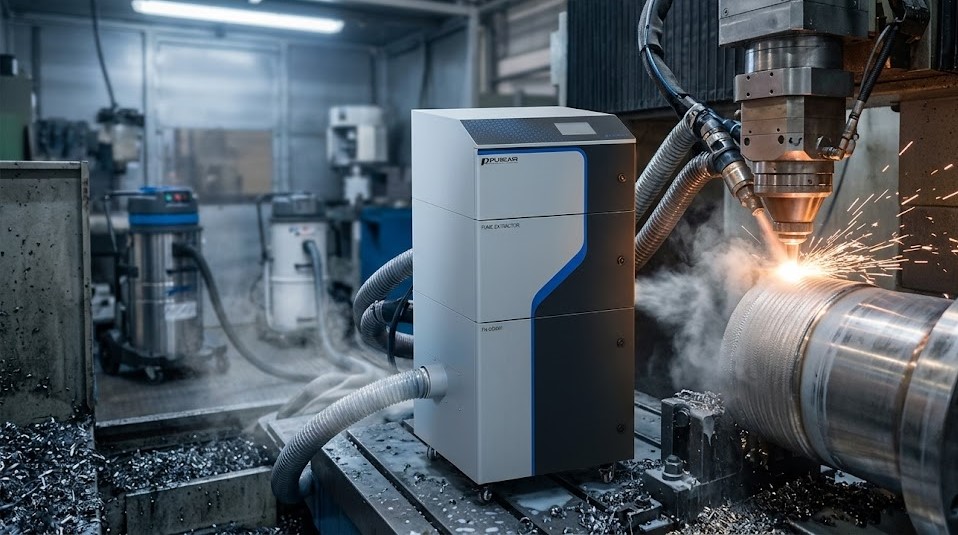
The most effective method of controlling metal cutting fumes is capturing contaminants directly at the source before they disperse throughout the facility.
An effective system typically includes:
High Negative Pressure Extraction
Strong suction quickly captures smoke and dust where they are generated.
Multi-Stage Filtration
Different filtration stages remove:
- Large particles
- Fine dust
- Metal fumes
- Ultra-fine particulate matter
Intelligent Airflow Management
Optimized airflow ensures stable performance and energy efficiency.
PURE-AIR Solutions for Metal Cutting Applications
PURE-AIR provides customized industrial fume extraction systems designed specifically for metal processing environments.
Key technologies include:
High Negative Pressure Fan Technology
Ensures rapid and efficient source capture.
PIPS Intelligent Purification System
Optimizes airflow performance and filter management.
Long-Life Filtration System
Provides high dust-holding capacity and reduced maintenance requirements.
Customized Solutions
Suitable for:
- Fiber laser cutting
- Plasma cutting
- Flame cutting
- CNC machining
- Metal fabrication workshops
Conclusion
Metal cutting processes inevitably generate harmful fumes, smoke, and dust that can impact worker safety, equipment reliability, product quality, and regulatory compliance.
By understanding the sources of these contaminants and implementing professional fume extraction systems, manufacturers can create cleaner, safer, and more productive working environments.
PURE-AIR is committed to helping metal processing facilities achieve superior air quality through advanced industrial fume extraction and purification solutions.