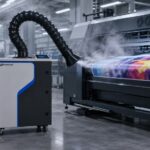
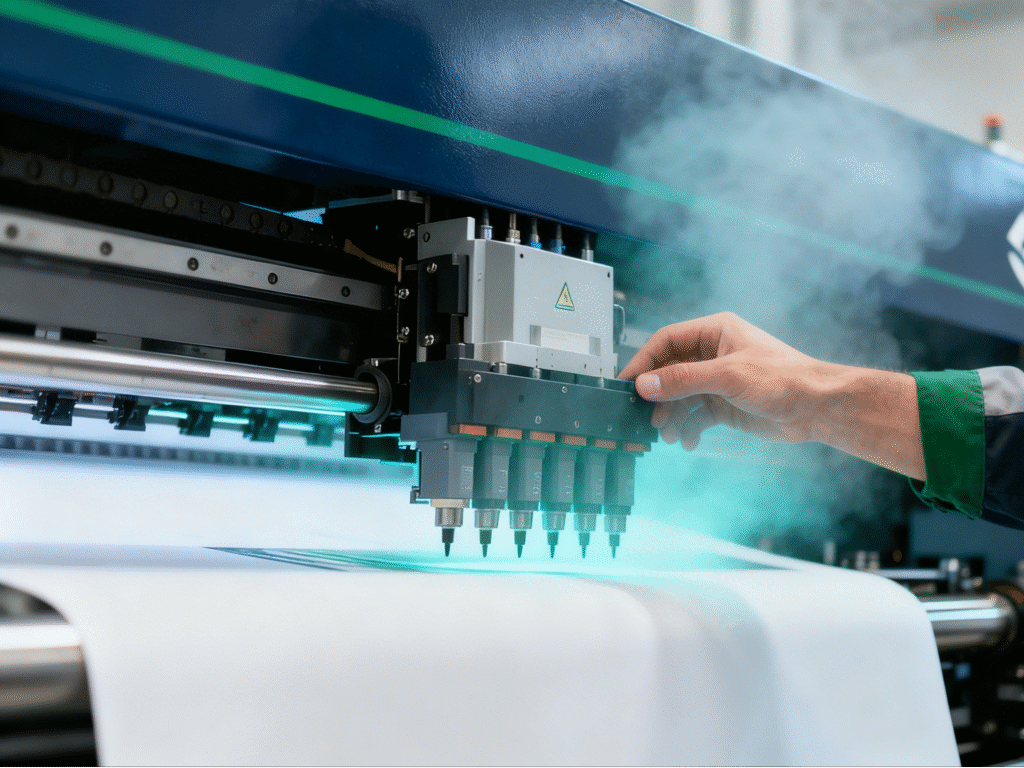
Commercial digital print shops and industrial packaging facilities rapidly adopt ultraviolet (UV) curing technologies to accelerate production speeds and achieve instant ink drying. However, operators inside these production environments frequently report a distinct, sharp “burnt plastic” or “metallic” odor lingering near the printheads. This pungent smell does not merely represent a minor workspace annoyance; instead, it signals the active presence of toxic molecular gases.
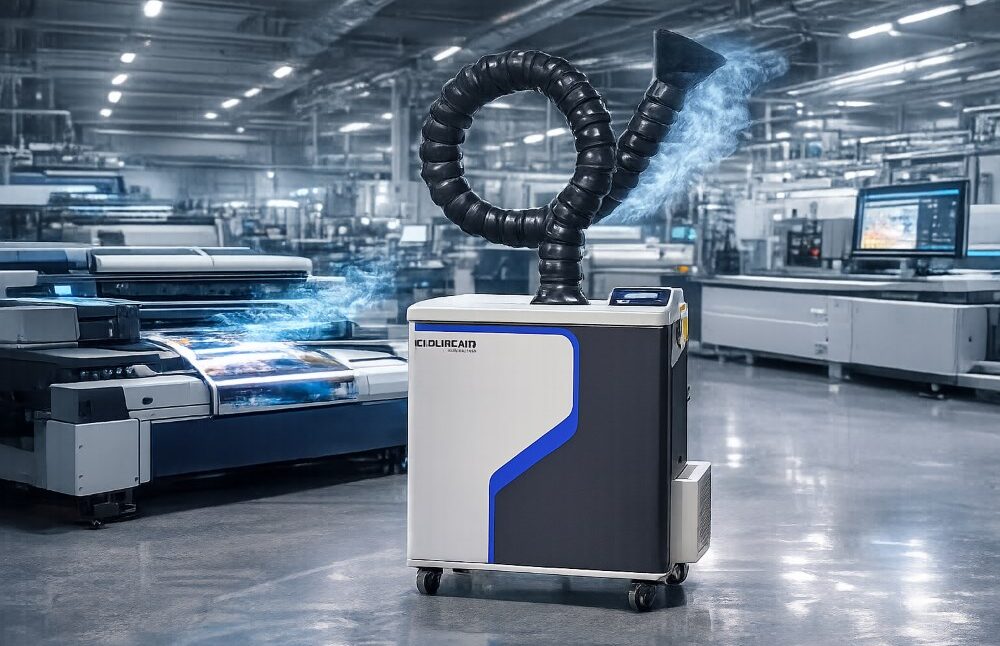
Relying on simple open windows or basic ambient wall fans fails to protect your personnel from these invisible chemical hazards. Deploying a specialized, high-capacity fume extraction equipment system is the only way to neutralize these molecular-level toxins safely. This technical guide explores the chemical realities of UV curing emissions and explains how advanced molecular filtration protects your printing workshop.
1. The Chemical Reality of UV Curing: Why Dust Collectors Fail
Many workshop managers mistake chemical printing fumes for standard airborne dust particles, leading them to source ineffective workshop air filters.
 Standard Dust Collector: [HEPA Mechanical Mesh] ──> Catches Solid Ink Particulates ──> ❌ Gaseous Toxins Pass Through
 Premium Fume Extractor:  [Chemical Carbon Bed]  ──> Absorbs Molecular Gas Toxins  ──> ♻️ 100% Purified Clean Air
During the high-intensity UV curing process, powerful ultraviolet lamps bombard specialized liquid inks with intense radiation to trigger rapid polymerization. This violent photochemical reaction breaks down molecular bonds, releasing high concentrations of volatile organic compounds (VOCs) and generating ozone ($O_3$) gas from surrounding oxygen molecules.
Because VOCs and ozone exist as sub-micron gas molecules rather than solid dust particles, they pass right through standard mechanical air filters. A basic dust collector cannot trap these microscopic chemical vapors, allowing them to recirculate directly back into the breathing zone of your machine operators. Therefore, capturing these hazardous gases requires an advanced fume extraction equipment architecture that features dedicated multi-stage chemical adsorption layers.
2. Neutralizing Toxins with Industrial-Grade Modified Activated Carbon
Safely capturing highly reactive ozone molecules and volatile solvent vapors requires advanced chemical neutralization inside the filter core.
                  Multi-Stage Molecular Filtration Matrix:
 ┌──────────────────────────────────────────────────────────────────────┐
 │ Stage 1: Pre-Filter traps large airborne ink overspray droplets.     │
 ├──────────────────────────────────────────────────────────────────────┐
 │ Stage 2: HEPA Core captures ultra-fine respiratory particulates.     │
 ├──────────────────────────────────────────────────────────────────────┐
 │ Stage 3: Modified Carbon bed adsorbs and breaks down ozone & VOCs.   │
 └──────────────────────────────────────────────────────────────────────┘
Our advanced FS-i series tackles this complex molecular filtration challenge by utilizing a heavy-duty, industrial-grade modified activated carbon filtration bed. Standard activated carbon often struggles to retain highly volatile printing solvents and reactive ozone over long production cycles.
To overcome this limitation, we scientifically treat our carbon substrates with specialized chemical compounding agents to optimize pore structures and surface reactivity. When the contaminated printing air stream passes through the filter bed, the modified carbon active sites attract and bind the hazardous VOC molecules permanently. Concurrently, the formulation accelerates the natural decay of unstable ozone molecules, breaking them down into safe, breathable oxygen ($O_2$) instantly.
3. The Operational Advantages of Localized At-Source Fume Extraction
Installing a compact, portable extraction unit directly at the print carriage provides superior safety and efficiency compared to massive facility HVAC upgrades.
 Central HVAC Exhaust ──> Pulls Toxins Across the Whole Room ──> ❌ Exposes Operators to Vapors
 Localized Extraction  ──> Captures Vapors Instantly at Source  ──> ♻️ Keeps Workshop Air Pristine
-
Immediate Containment of Chemical Plumes: Point-of-origin extraction hoods capture warm solvent vapors the exact millisecond they escape from under the UV lamp housing. This rapid capture prevents the toxic plume from expanding across the facility floor, protecting nearby prep-press workers from passive chemical exposure.
-
Drastic Reduction in Building Energy Costs: Large central exhaust fans pull vast amounts of conditioned air out of your building, inflating your monthly heating and cooling utility bills. Our localized fume extraction equipment purifies the contaminated air internally and returns clean, conditioned air right back into your shop, eliminating expensive building air losses.
-
Flexible Mobility for Changing Floor Plans: Digital print shops regularly adjust their hardware layouts when adding wide-format plotters or new flatbed cutting tables. Portable extraction enclosures roll easily alongside your printing machinery, matching your evolving operational footprint perfectly without requiring permanent roof ducting installations.
Workshop Air Management Architecture Comparison
| Air Purification Metric | Standard Shop Ventilation Fans | Fume Extraction Equipment |
| Gaseous VOC Adsorption | None; simply moves toxic fumes around the room | Absolute; modified carbon beds trap solvent vapors |
| Ozone (O_3) Neutralization | Low; relies on slow, natural indoor dilution | High; chemical filtration transforms ozone into O_2 |
| Operator Breathing Safety | Variable: employees still inhale localized odors | Excellent; creates a clean zone around the printer |
| Facility Thermal Efficiency | Poor; vents expensive heated or cooled air outside | Perfect; internal recycling saves HVAC energy costs |
| Regulatory Health Compliance | Low; fails strict indoor air quality checks | High; satisfies global workspace safety criteria |
Conclusion: Secure Your Workshop Air Quality Standards
Long-term success in digital printing depends on a clean, safe, and efficient production environment. Therefore, effective fume extraction supports both employee safety and consistent printing performance. Instead of relying on basic shop fans, choose professional fume extraction systems for UV printing applications. These systems capture chemical fumes and reduce unpleasant curing odors during daily production. Multi-stage filtration helps improve workplace air quality and supports stable equipment operation. In addition, portable extraction units fit easily into different printing workshops and production lines. Whether you operate a small print shop or a large facility, reliable air filtration protects your team and equipment.
👉Contact our technical team today to discuss your application and find the right fume extraction solution for your business.